Medium Format Film Scanning
120 Film Digitised At The Highest Possible Quality.
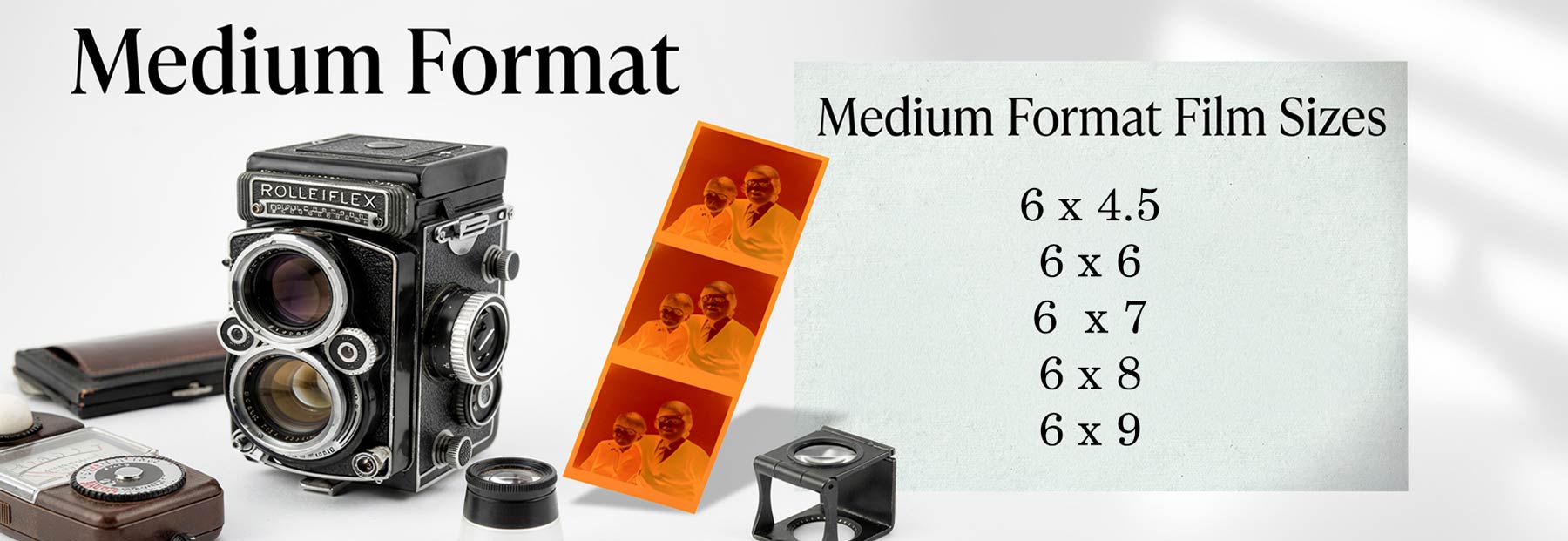
Prices for Medium Format
1 – 9 negatives
70p each
10 – 49
50p each
50 – 99
45p each
100 or more
40p each
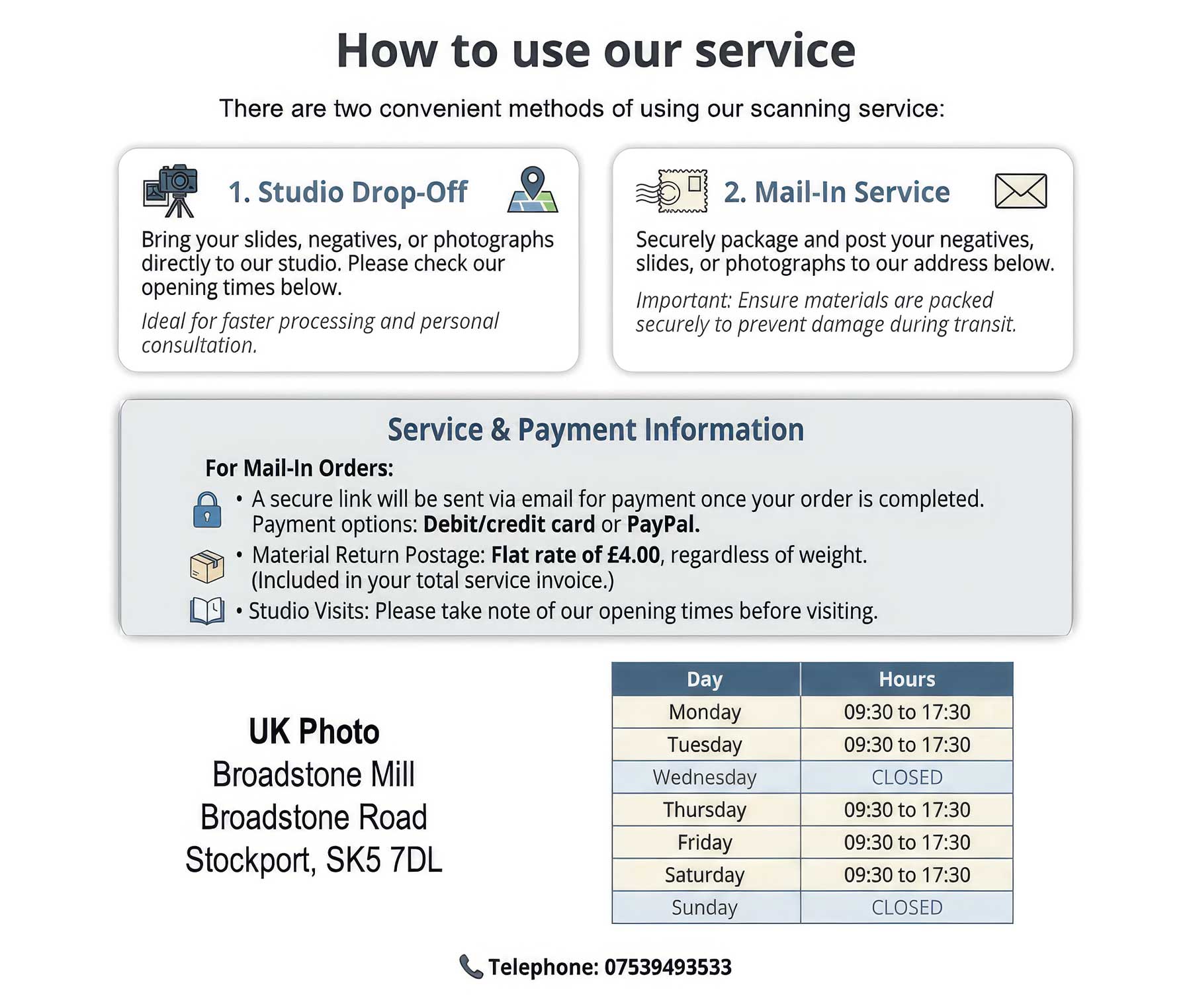
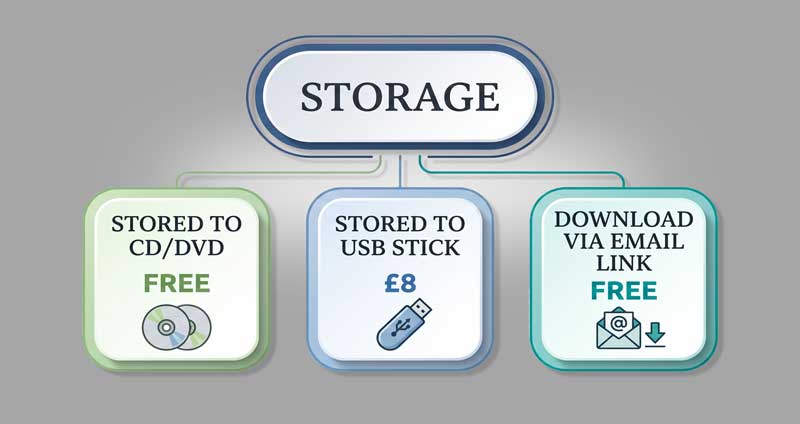
Medium Format Film Scanning Inquiries
If you have any questions regarding our scanning service, please enter them in the box above.
Enter either your email address or telephone number depending upon how you would like us to contact you.
Potted History of Medium Format Film
1901 — 120 Film Introduced
Kodak launches 120 roll film, establishing the flexible roll format that becomes the backbone of medium‑format photography.1900s–1930s — Early Roll‑Film Cameras
Folding cameras from Kodak, Voigtländer, Zeiss Ikon and Agfa popularise frame sizes like 6×9, 6×6, and 6×4.5. Medium format becomes the serious amateur’s choice thanks to large negatives and portable cameras.1929 — Rolleiflex TLR
The Rolleiflex arrives, defining the 6×6 square aesthetic and introducing a compact, professional‑grade twin‑lens reflex system.1948–1957 — Hasselblad Modular SLR
Hasselblad’s 1600F and later 500C establish the modular medium‑format SLR: interchangeable lenses, backs, and finders. By the 1960s, Hasselblad becomes the professional studio standard — and the camera system used on NASA missions.1950s–1970s — Expansion of Professional Systems
Mamiya C‑series TLRs offer interchangeable lenses.Bronica launches Japan’s modular medium‑format competitor.
Medium format dominates fashion, portraiture, and commercial work.
1969 — Pentax 6×7
Pentax introduces a giant 35mm‑style SLR that shoots 6×7, giving medium format a familiar handling feel and becoming a favourite for portrait and landscape work.1970s–1980s — Studio Workhorses
Mamiya RB67/RZ67 bring rotating backs and bellows focusing.Rangefinders
Fuji GW/GSW rangefinders deliver huge 6×9 negatives in compact bodies.1984 — Pentax 645
The 645 format becomes a faster, more economical medium‑format option, ideal for weddings and editorial work.1990s — Autofocus Arrives
The Contax 645 (1999) introduces autofocus medium format with Zeiss lenses, becoming a favourite for fashion and wedding photographers.2010s — Analogue Revival
A new generation rediscovers medium format film for its tonality, grain, and deliberate shooting experience.2020s–Present — Creative Renaissance
Medium format film thrives as an aesthetic choice. Cameras like the Hasselblad V‑system, Pentax 67, Mamiya RB67 and RZ67, Bronica SQ/ETR, and Fuji GW series remain highly sought after. 120 film continues in production from Kodak, Ilford, and Foma.UK-Photo, Broadstone Mill, Broadstone Rd, Reddish, Stockport, SK5 7DL • TEL:
07539493533
Our studio/shop is located between Manchester and Stockport. Our studio customers come from across the Northwest of England.
©2026 - Copyright uk-photo.live