Disc Film Scanning Service
Disc Film Digitised At The Highest Possible Quality.
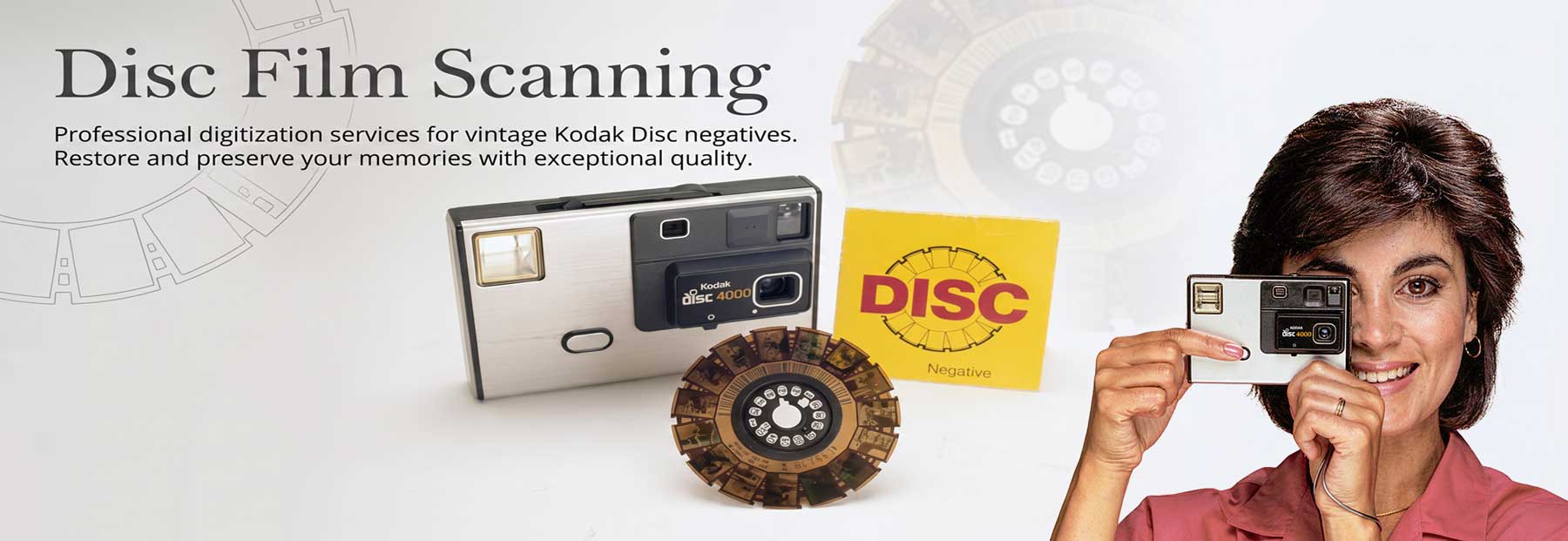
Prices for Disc Films
1-5 Disc
£8 each
6 to 9 Discs
£7 each
10 to 49 Discs
£6 each
50 or more Discs
£5 each
Potted History of the Disc Film Format
Kodak introduced Disc film in 1982 as a futuristic, convenience‑driven snapshot format. Each sealed plastic cartridge held 15 exposures on a flat circular disc, with tiny 8×10 mm negatives arranged around the edge. The design allowed ultra‑thin, fully automatic cameras that required no threading, rewinding, or manual handling of film. Despite strong initial sales and broad industry support, the format struggled. The miniature negative produced visible grain and limited detail, and many photo labs lacked the specialized enlarging lenses needed for optimal results. As compact 35 mm point‑and‑shoot cameras rapidly improved, Disc’s advantages faded. Kodak discontinued Disc cameras in 1988, and film production ended by the late 1990s. Today, Disc film survives as a niche collectible—remembered for its clever cartridge design and its role in the evolution of consumer photography.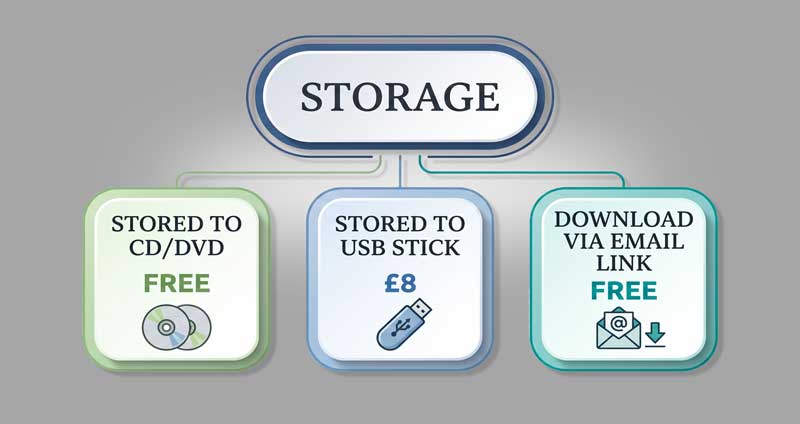
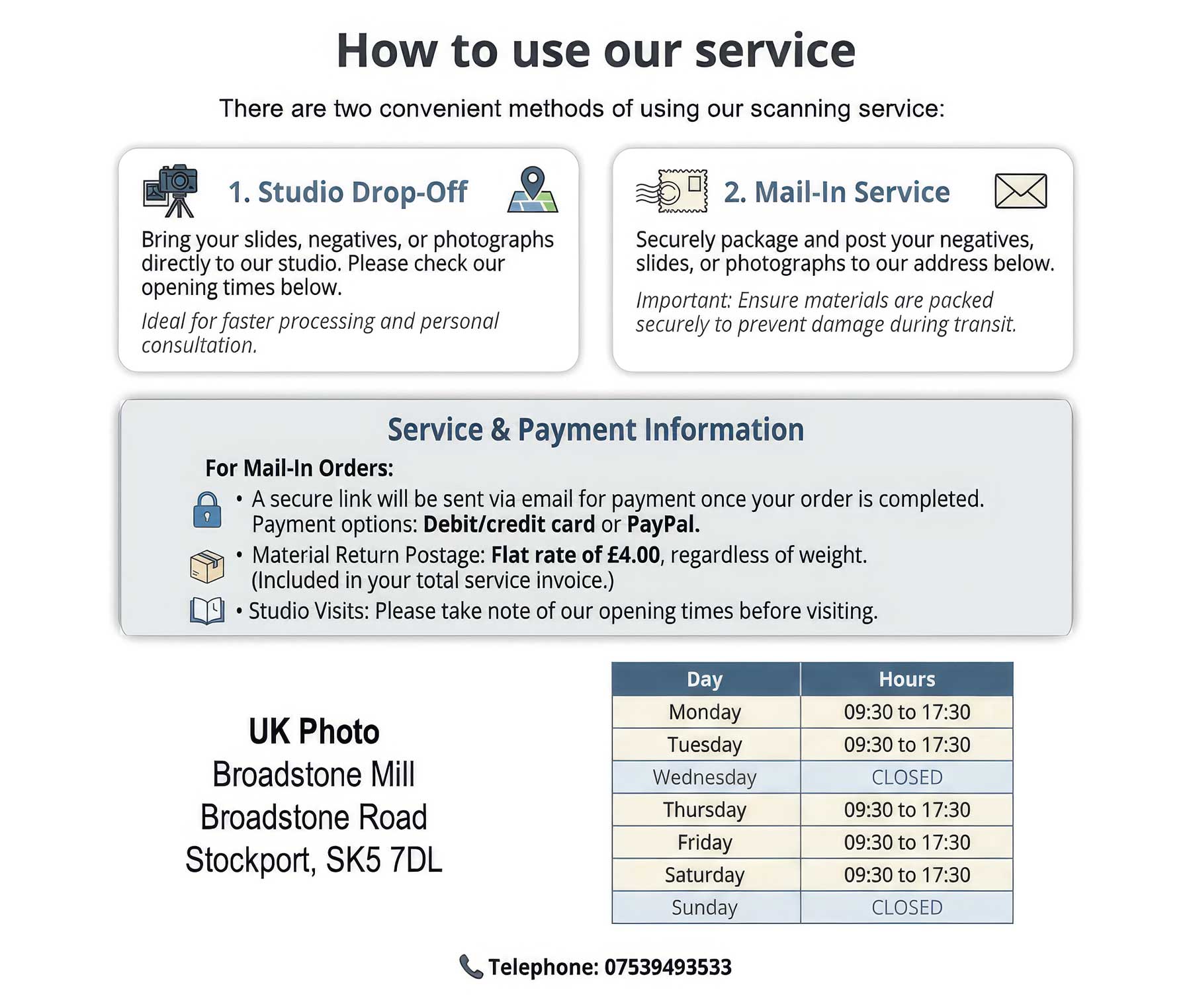
Disc Film Scanning Inquiries
If you have any questions regarding our scanning service, please enter them in the box above.
Enter either your email address or telephone number depending upon how you would like us to contact you.
UK-Photo, Broadstone Mill, Broadstone Rd, Reddish, Stockport, SK5 7DL • TEL:
07539493533
Our studio/shop is located between Manchester and Stockport. Our studio customers come from across the northwest of England.
©2026 - Copyright uk-photo.live