APS Film Scanning Service
APS Film Digitised At The Highest Possible Quality.
Prices for APS Cartridges
15 exposures
£3.50
25 exposures
£4.00
40 exposures
£5.00
APS is not perfect though. The smaller frame size provides less resolution than 35mm and in rare cases the negative's emulsion can be contaminated by the adjacent frames and acquire a faint ghost image of the neighbouring frame.
Shooting APS Film Today
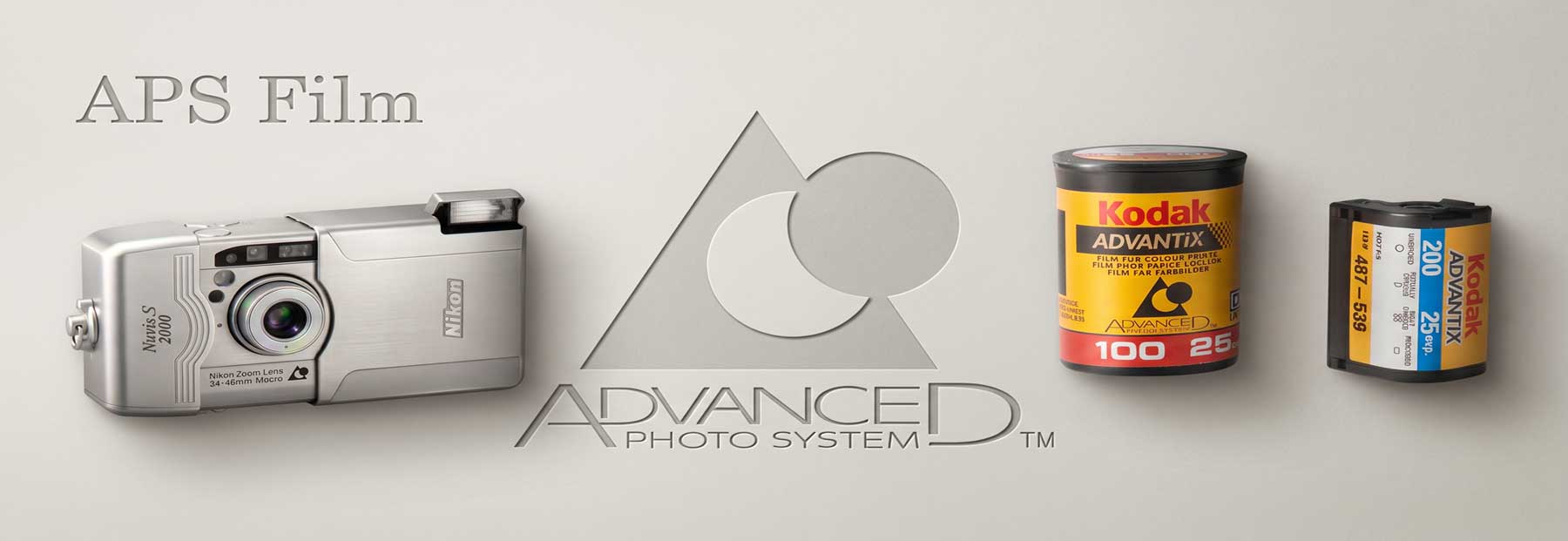
If shooting APS today, you will be using expired film stock as manufacturing ceased in 2011. Results obtained from such expired film will show significant grain and colour shifts. Shooting black & white may avoid the colour issues, but a genuine black & white APS film was never produced, however Kodak did manufacture a C41 variant called "Black & White Plus" which is processed as colour film.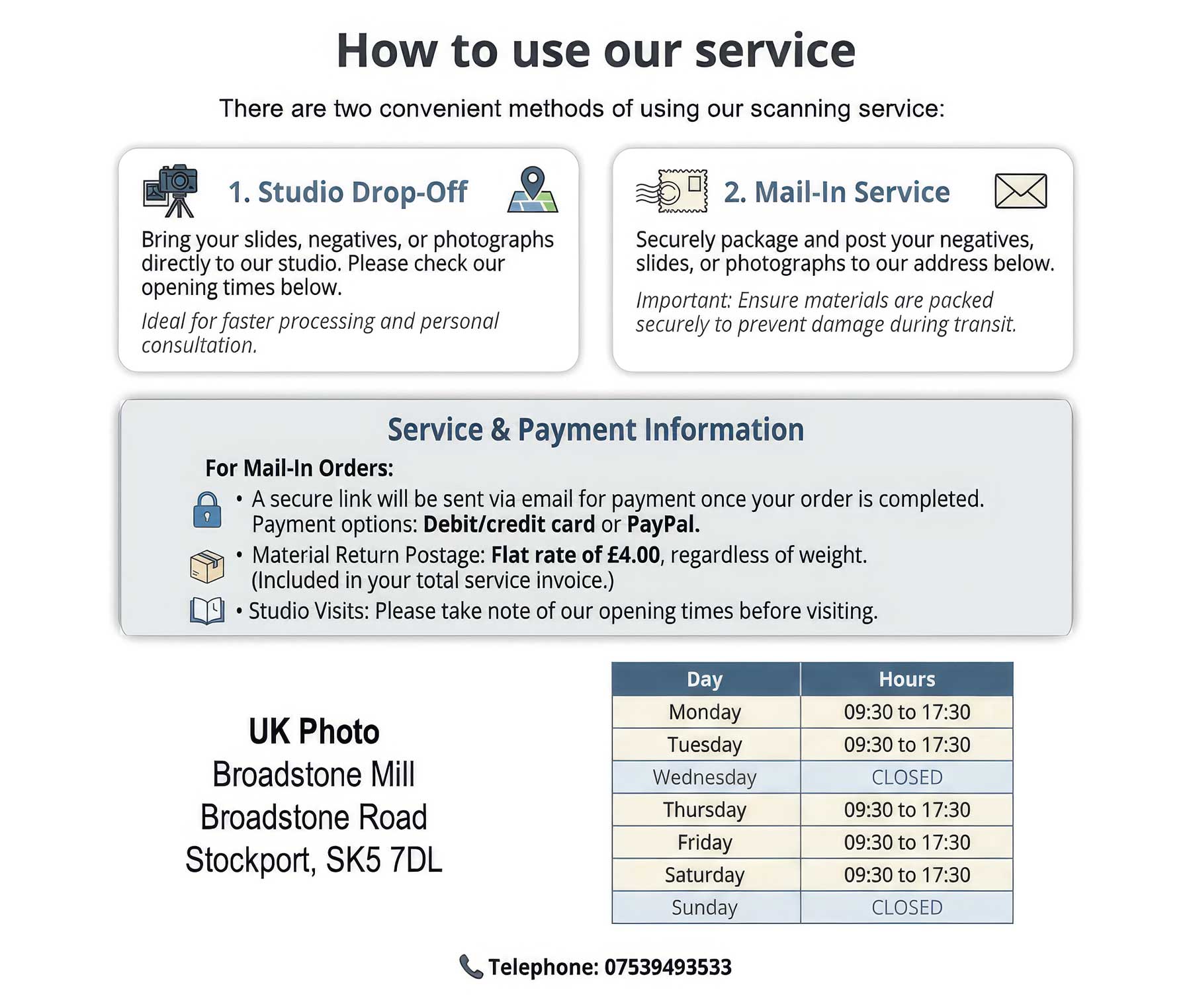
APS Film Scanning Inquiries
If you have any questions regarding our scanning service, please enter them in the box above.
Enter either your email address or telephone number depending upon how you would like us to contact you.
Potted History of the APS Film Format
APS (Advanced Photo System) was introduced in 1996 by a consortium of Canon, Fujifilm, Kodak, Minolta, and Nikon, evolving from Kodak’s earlier Project Orion. It was designed as a modern, consumer‑friendly alternative to 35mm, built around a leaderless drop‑in cartridge, 24 mm film, and three selectable aspect ratios (C/H/P).A key innovation was the magnetic IX data strip, allowing cameras to record exposure and print information directly onto the film. Cartridges also featured status indicators showing whether film was unshot, partly used, exposed, or processed. This was most beneficial for MRC (mid roll change) cameras which allowed photographers to remove the film mid-roll then continue from the last unexposed frame when the cartridge was reloaded.
APS gained early traction thanks to compact cameras and simplified handling, but its smaller negative, higher costs, and the rapid rise of digital photography undermined its future. Camera production declined sharply after 2000, and film manufacturing ended between 2004 and 2011, with Kodak’s withdrawal marking the format’s effective end.
Today APS survives mainly as a collector’s curiosity, notable as the last major consumer film format launched before digital imaging took over.
UK-Photo, Broadstone Mill, Broadstone Rd, Reddish, Stockport, SK5 7DL • TEL:
07539493533
Our studio/shop is located between Manchester and Stockport. Our studio customers come from across the Northwest of England.
©2026 - Copyright uk-photo.live